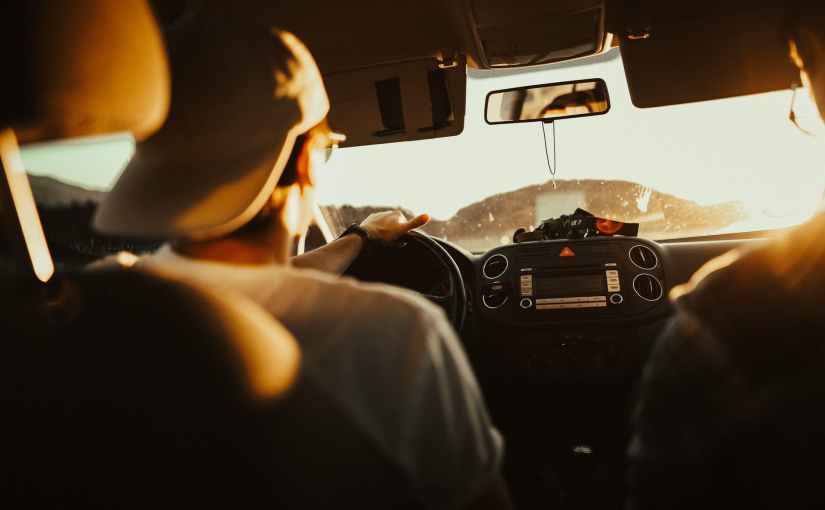
Last week I took Emily and Ellie out for their first drive. They turned 15 a few months ago, and it was time to start practicing.
It was their first time behind the wheel, so I kept things simple. I drove to an empty school parking lot. I stopped the car in the middle – lots of space on every side of us.
“Who’s first?”
Emily was quick to reply, “I’ll go!”
She got behind the wheel and started adjusting the seat and mirrors. I hadn’t even told her to look at the mirrors. Maybe she’s seen me, Chad, and Mary do it when we get behind the wheel. The things they notice.
I walked her through the basics – the parking brake, the gears, and the pedals. I had her change gears while the parking break was still on. I had her pump the brakes a couple of times while the car was still in park. Then I had her release the parking break and let the car roll a bit, then stop. Roll a bit, then stop. Gently, slowly getting a feel for how the car moves and the pedals respond. I told her to drive slowly around the parking lot.
That was all the direction I gave. She was nervous, and she took it slowly.
While she was driving, a minivan joined us in the parking lot. We hoped they’d realize what we were doing and park on the other side. Then we noticed the two switch seats – it was a Mom and her son. Another driving lesson about to begin.
Emily continued her circles and figure eights. We lurched forward a couple of times as she got used to the touchy gas pedal.
Meanwhile, the minivan didn’t move. The Mom was talking to the son as he sat in the driver’s seat.
Our car came to a hard stop. “Whoops, sorry,” Emily apologized. Touchy brakes too.
I had Emily park the car. Then I had her put it in reverse and back out of the parking spot. With nothing around her, there wasn’t any danger of hitting anything. She was learning the gears, the mirrors, and the general movement of the car.
The minivan was still parked. The mom was still talking.
I wondered aloud – “How much will that boy remember?”
“Nothing,” Emily replied.
We all agreed.
My kids tune me out after two sentences. I don’t think it’s because I’m boring. Kids learn by doing. They listen when they need information. Providing just-in-time coaching is the most effective way to teach kids what they need to know – because they’ll hear it.
Today was about getting comfortable with the pedals, steering wheel and how the car moves. We weren’t going to leave the parking lot, so there wasn’t any need to go teach them about the blinkers. The sun was shining, so we didn’t talk about windshield wipers. Speedometer? They wouldn’t get above 15 mph in a parking lot. And I don’t want them worried about watching the speedometer while they’re just getting used to the gas pedal.
All of these things are important, and we’ll cover all of them as we drive with the girls. I know that because Washington state requires kids log 50 hours of driving before they take their drivers test. Chad and I hold firm to this. Nothing can prepare kids to drive safely more than practice. So we were happy to download the RoadReady app and log both Payton and Mary’s hours when they were learning. Mary hit 50 hours, 10 minutes before she took her drivers test. Payton reached 32 hours. He never took his test. We wouldn’t let him sign up for the test because he didn’t reach 50 hours. He’s 20 years old now, so he can do whatever he wants. But he’s chosen not to drive (that’s a topic for another post).
Because the girls will spend 50 hours behind the wheel (both declared they want their license), I don’t need to cover everything in the first drive. I can give them information in small chunks, letting them learn gradually. Two or three new lessons each time we drive. I know there will be a big shift as they begin driving on the roads. Even then, I can carefully select the roads we use in the beginning. Wider, less trafficked streets. Start by taking only right turns. They can use the blinker several times, learn to watch for pedestrians and cars, and continue learning how to maneuver the car. Then, when they’re comfortable with that, we’ll turn left.
Long speeches are a thing of the past. They’re ineffective and give a false sense of confidence to the teacher that they’ve done their job. Teaching requires flexibility. Teachers who want to be successful must meet the learner where they are. Combining learning styles – talking, doing, reading, with a heavy emphasis on doing.
So, every weekend we’ll be in the car with the girls, teaching them how to drive. A few more times in the parking lot, then we’ll take to the streets. We’ll go at their pace, adding new lessons as they’ve mastered the earlier ones. No need to worry if you drive in West Seattle – they’ll do just fine.
 The Frampton Clan