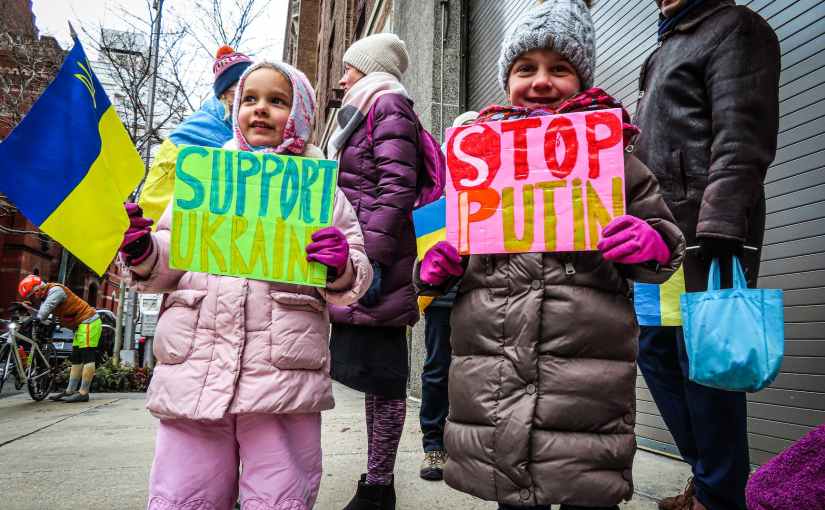
Talking to Kids About War Is Like Talking to Them About Sex

Okay, so it’s not.

Talking to kids about war is not like talking to them about sex. However, the approach I’m using is similar. Stick with me.

When Mary and Payton were in Elementary School our PTA had a speaker come and talk to us. The topic: How to talk to your kids about sex. It was one of the most highly attended events. Everyone was eager to learn yet…uncomfortable. We’d all grown up with parents who either avoided the conversation altogether or took us through a horribly long, awkward conversation where they never named a body part. Instead they used nicknames. Penis was more comfortably referred to as “pee pee.” Apparently some parents referred to “broccoli.” Yikes.

Two things stuck with me. First – name it. Vagina is vagina, penis is penis and so on. Avoiding the names of body parts, she pointed out, makes them seem like something we should be ashamed of, embarrassed about and ultimately, something we shouldn’t talk about. The second thing that stuck with me – ditch the 2-hour conversation. Instead, have 200 one-minute conversations. One long, awkward two-hour conversation is something you get through. 200 one-minute conversations give kids the sense that it’s safe and comfortable for them to come to you when they have questions.

So, what does this have to do with war? 

On February 23, 2022, Russia invaded Ukraine. After it happened, several experts admitted they were surprised. It was a bold move motivated by Putin’s desire to take back what Russia once had. This is the first time since WWII that an invasion like this has happened among the Western countries. I want my kids to understand the gravity of the situation. But I don’t want to terrorize them. 

We learned Russia bombed a building marked “Children.” Ukrainians had intentionally labeled the building so Russian’s would know civilians were there. “Don’t bomb us” was the underlying message. Russia did anyway. When talking about it, I find myself wanting to replace “murder” with some other, less disturbing word. But then I think about the advice we’d been given – Name It. It was murder, and I should say it. Sugar coating it with less intense words doesn’t explain the reality, and it’s an injustice to the Ukrainians. 

Hearing about and talking about murder and atrocities of war day after day is hard for me as an adult. Adding that to the thoughts of anxious teenagers could be twice as intense and possibly crippling. When 9/11 happened, I remember my doctor telling me how traumatizing it was for kids to see news stories showing the planes flying into the World Trade Center buildings. Younger kids, she pointed out, didn’t realize it was the same scenes being replayed. They thought it was happening over and over, across the U.S. There were terrorized. Specialists started encouraging parents to moderate how much news they watched. 

Learning from the past, we manage the frequency and depth of the news and conversations we have about the war. The news is on the radio in the morning and evening. We want to know what’s happening. Chad and I highlight information we believe is important for them to hear. But we keep the conversations short. 

Mary came home one night after soccer practice. She’d filled up the car with gas and was shocked at the gas prices. “The price of gas is $4.65 per gallon!” Chad and I nodded. We knew the war was having an impact on gas prices. Chad took the opportunity to explain this to Mary. While the war might feel far away, there are ripple effects. War impacts all of us. He didn’t go into a deep explanation of how gas prices are set. A one-minute (okay, maybe two-minute) conversation. 

During a news story one morning, a reporter shared what Russia was broadcasting to Russian citizens. Apparently they’re claiming Ukraine is bombing itself. “That’s absurd!” I blurted out. “Why would anyone believe citizens would bomb themselves?” The kids were making their lunches. I wanted the kids to hear what I was saying. “You have to think about what you’re being told. If it doesn’t make sense – ask questions. Something’s wrong.” We talked briefly about the Russian press and the importance of a free press. Then they continued getting ready for school. Another 1-minute conversation. 

Figuring out what to say to your kids requires a fine balance. You want them to be informed, to understand what’s happening in the world. But you don’t want them to be afraid. As I navigate these conversations, the advice I was given to help me talk to my kids about sex feels relevant and useful as I try to talk to my kids about war. Hindsight will tell.

A Path of Their Own

Emily and Ellie, our twin girls, have always been somewhat shy. They avoid interactions with others when they can, and they tend to go with the flow to avoid drawing unwanted attention. That’s why we were startled when Emily declared, “I’m not going to West Seattle High School.”

WSHS is the neighborhood school. Payton, our oldest, went there and Mary, our second, is a senior there. It was, and has been, great for them. We assumed Emily and Ellie would follow. It’s the path of least resistance. But to say I was totally surprised wouldn’t be true, either. Ellie and Emily’s school experience has been different. They often come home complaining that their teachers spend more time managing the classroom than teaching. Payton and Mary had some classes like this, but it felt more consistent for the twins (I have to give credit to a couple of teachers and staff who are amazing…Ms. Russell, their language arts teacher and Ms. Bell the librarian – both inspired and taught the girls a lot). Unfortunately, the twins’ experience weighed more heavily towards the unruly classrooms, and Emily and Ellie wanted a place where they could learn.

We looked into their options, and they chose three to consider: The Center School (TCS), Nova and Vashon High School.

TCS and Nova are alternative schools. TCS’s curriculum is centered around learning through art. Nova focuses on learning through inquiry and problem based instruction. Both are part of the Seattle Public School system, so tuition wouldn’t be required (we can’t afford private school – saving for college is daunting enough). Vashon is a smaller high school. Every year a small cohort of kids in West Seattle go to Vashon HS. We know of a couple of kids who go to TCS. We hadn’t heard of anyone going to Nova.

The decision wouldn’t come without risks. School funding is always in question. Would alternative schools like Nova and TCS suffer first if Seattle Schools face a funding shortage? The commute. TCS and Nova would require a city bus ride to downtown Seattle. Is that safe? Vashon requires a bus and a ferry ride. How much time would the girls have to spend commuting each day? The risks were mitigated a bit when we learned that, if the school they chose didn’t work out, the girls could switch back to West Seattle HS anytime, but we wanted to learn more. 

Ellie and Emily’s best friend’s older brother went to TCS, so we talked with his parents. He, too, needed a different environment and smaller class sizes felt right, and they were happy with it. The teachers and staff really committed, good education. They had some gripes – the communication isn’t always clear, the counselor isn’t as responsive as they’d like – things you see at most schools. When we asked about the bus ride, her parents said several kids from West Seattle went to TCS. They discovered each other soon after the year started, and they tended to travel together, so they weren’t really alone. The commute was a non-issue. 

We attended a couple of the school Open Houses. It was the year of Covid-19. School buildings were closed, so Open Houses were virtual. Chad, Emily, Ellie and I sat on our couch, the computer stationed on the piano bench in front of us, and we watched and listened to teachers and students from TCS and Nova talk about the schools – the purpose, the approach and, most importantly, the kids’ experiences. The kids who shared had a similar quiet demeanor as Ellie and Emily. They talked about how their existing schools just weren’t working for them. They said the switch TCS / Nova provided an environment where they were more comfortable engaging and participating. More than one said, “I’ve found my voice.” 

That’s probably what solidified for me that one of these schools would be right for the girls. After the open houses, we asked them again, “what do you think?” Emily declared, “My first choice is the Center School, my second choice is Vashon, my third is Nova.” Ellie was quieter. 

It’s easy to assume twins will make the same decisions. They’re closer to each other than to anyone else, and their choices are often the same. But they are, and want to be, unique individuals. So, we made sure to tell each of them explicitly – you can make your own decision. We weren’t sure what we’d do if only one wanted a downtown school (imagining Emily riding the city bus by herself gave us trepidation, but we’d cross that bridge if and when we got there). “Ellie, what are you thinking?” Ellie agreed with Emily’s choices, she just needed more time to work herself up to the change. We gave her some space to think and didn’t raise the question for several days.

When it came time to submit their school choices, they both chose The Center School as their #1 option. We submitted the paperwork, and in April, they got the formal confirmation, they were enrolled in TCS for their Freshman year of high school. They would be taking a path of their own.