Masks Off In Schools – Why Now?

On Monday, kids won’t have to wear masks in school anymore. The governor lifted the mask mandate. In a time of confusion and constant change, I wonder if this will help us move forward or if it will create unnecessary angst and conflict.

On the side of taking masks off, the omicron variant is milder. People are getting it, they’re sick for a few days, then they’re over it. The hospitalization and death rates are lower. Our hospitals are no longer overwhelmed with cases. Patients who’ve needed treatment for other ailments but were displaced by Covid patients are finally able to make their appointments. 

Some teachers welcome it, too. I ran into an acquaintance last week. She’s a kindergarten teacher, and I asked her what she thought about the mask mandate being lifted. “I love it!” she exclaimed. She told me how hard it is to hear her kids through their masks when they’re reading aloud. She can’t wait. Then she hesitated before saying, “I hope it’s as easy for them to take the masks off as it was to put them on.” When we taught kids to put their masks on, we had to impress upon them the gravity of the situation. Did we do such a good job they’ll be scared to remove them?

On the side of leaving masks on, some people within our communities have underlying conditions that make even the omicron variant dangerous for them. Teachers with at risk family members, kids with at risk parents or grandparents. For them, the thought of walking into school everyday interacting with people who are maskless induces a whole new anxiety. “What if I give it to my grandmother?” 

To those who are concerned about their families, we try to reassure them by saying, “You can still wear a mask.”

Are we aware of the underlying message we’re sending? “I’m sorry you’re in that situation, but you’ll have to deal with it on your own.” 

Mary came home Friday and shared that one of her teachers asked kids to keep wearing masks. She’s worried about one of her family members. Another teacher told her students teachers aren’t allowed to ask students to wear masks (apparently the first teacher doesn’t know this yet). All of the teachers are trying to learn what the rules are and how best to adapt to the new expectations. All in one week. We’ve been wearing masks for two years, and we gave the teachers one week. Emily and Ellie’s school is in a city building where, apparently, masks are still required. No one is spending their weekend trying to figure out how to transition to new expectations.

The divide will be visible. Students and teachers with at-risk family members will continue wearing masks, feeling constant anxiety they might bring COVID-19 home with them while others will feel the freedom of walking around maskless.

The question is, how will we handle it? Will we band together in support of that teacher and voluntarily put on our masks in their classroom? Or will we celebrate our new found freedom dismissive of what our fellow teachers, friends, families are going through? Afterall, they can still wear a mask……

Mary isn’t sure what to do. She feels badly for the people she knows who are worried about their families. She’s planning to keep wearing her mask. They’ve been doing it for so long, she wonders what’s being gained by taking it off. 

That’s the question I keep asking myself. What’s gained? We’re about two months to the end of the school year. Are we creating a change management nightmare? We’ve gotten the kids to put on their masks. Now we’re going to encourage kids to take them off. Maybe struggling to convince some it’s safe. What if another variant surges and we have to put the mask mandate back in place? 

It would have been easier to keep masks on for the rest of the school year. It would have given us several months to see what’s next with Covid-19. If we’re really through the worst, great. Those who are feeling angst today will feel greater comfort and confidence returning to a maskless environment next Fall. If another variant emerges, no change in mask policy will be needed. As we approach the new school year, a decision can be made and new expectations can be set. Implementing change at the start of a new school year will be easier than doing it mid-flight.

There isn’t a single good answer. Taking masks off will be a welcome change for many – like the Kindergarten teacher I talked with. For others it brings more anxiety in an already anxiety ridden year (or two). I just hope we can approach this upcoming change with empathy and kindness. Empathy for those who are concerned, kindness towards everyone trying to adapt.
Teaching Kids to Drive

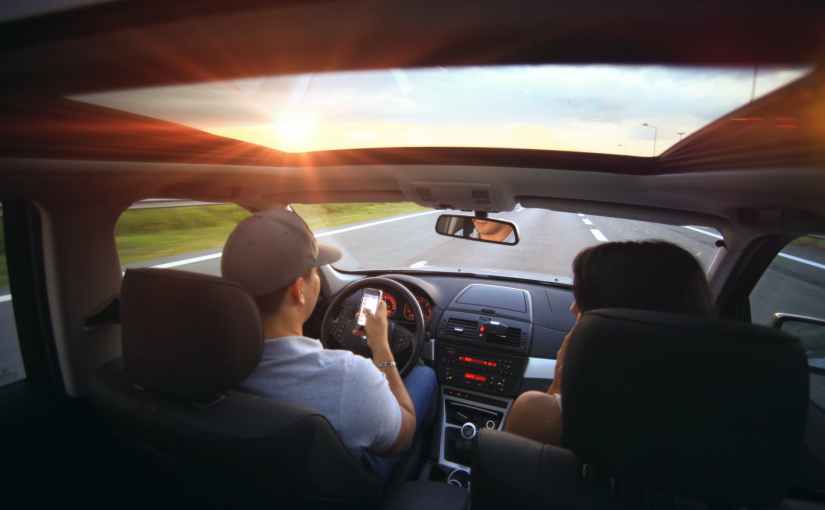
Last week I took Emily and Ellie out for their first drive. They turned 15 a few months ago, and it was time to start practicing. 

It was their first time behind the wheel, so I kept things simple. I drove to an empty school parking lot. I stopped the car in the middle – lots of space on every side of us.

“Who’s first?”

Emily was quick to reply, “I’ll go!”

She got behind the wheel and started adjusting the seat and mirrors. I hadn’t even told her to look at the mirrors. Maybe she’s seen me, Chad, and Mary do it when we get behind the wheel. The things they notice. 

I walked her through the basics – the parking brake, the gears, and the pedals. I had her change gears while the parking break was still on. I had her pump the brakes a couple of times while the car was still in park. Then I had her release the parking break and let the car roll a bit, then stop. Roll a bit, then stop. Gently, slowly getting a feel for how the car moves and the pedals respond. I told her to drive slowly around the parking lot. 

That was all the direction I gave. She was nervous, and she took it slowly.

While she was driving, a minivan joined us in the parking lot. We hoped they’d realize what we were doing and park on the other side. Then we noticed the two switch seats – it was a Mom and her son. Another driving lesson about to begin.

Emily continued her circles and figure eights. We lurched forward a couple of times as she got used to the touchy gas pedal. 

Meanwhile, the minivan didn’t move. The Mom was talking to the son as he sat in the driver’s seat. 

Our car came to a hard stop. “Whoops, sorry,” Emily apologized. Touchy brakes too.

I had Emily park the car. Then I had her put it in reverse and back out of the parking spot. With nothing around her, there wasn’t any danger of hitting anything. She was learning the gears, the mirrors, and the general movement of the car.

The minivan was still parked. The mom was still talking.

I wondered aloud – “How much will that boy remember?”

“Nothing,” Emily replied.

We all agreed. 

My kids tune me out after two sentences. I don’t think it’s because I’m boring. Kids learn by doing. They listen when they need information. Providing just-in-time coaching is the most effective way to teach kids what they need to know – because they’ll hear it. 

Today was about getting comfortable with the pedals, steering wheel and how the car moves. We weren’t going to leave the parking lot, so there wasn’t any need to go teach them about the blinkers. The sun was shining, so we didn’t talk about windshield wipers. Speedometer? They wouldn’t get above 15 mph in a parking lot. And I don’t want them worried about watching the speedometer while they’re just getting used to the gas pedal. 

All of these things are important, and we’ll cover all of them as we drive with the girls. I know that because Washington state requires kids log 50 hours of driving before they take their drivers test. Chad and I hold firm to this. Nothing can prepare kids to drive safely more than practice. So we were happy to download the RoadReady app and log both Payton and Mary’s hours when they were learning. Mary hit 50 hours, 10 minutes before she took her drivers test. Payton reached 32 hours. He never took his test. We wouldn’t let him sign up for the test because he didn’t reach 50 hours. He’s 20 years old now, so he can do whatever he wants. But he’s chosen not to drive (that’s a topic for another post).

Because the girls will spend 50 hours behind the wheel (both declared they want their license), I don’t need to cover everything in the first drive. I can give them information in small chunks, letting them learn gradually. Two or three new lessons each time we drive. I know there will be a big shift as they begin driving on the roads. Even then, I can carefully select the roads we use in the beginning. Wider, less trafficked streets. Start by taking only right turns. They can use the blinker several times, learn to watch for pedestrians and cars, and continue learning how to maneuver the car. Then, when they’re comfortable with that, we’ll turn left. 

Long speeches are a thing of the past. They’re ineffective and give a false sense of confidence to the teacher that they’ve done their job. Teaching requires flexibility. Teachers who want to be successful must meet the learner where they are. Combining learning styles – talking, doing, reading, with a heavy emphasis on doing. 

So, every weekend we’ll be in the car with the girls, teaching them how to drive. A few more times in the parking lot, then we’ll take to the streets. We’ll go at their pace, adding new lessons as they’ve mastered the earlier ones. No need to worry if you drive in West Seattle – they’ll do just fine.

Car Rides & Carpools

Want to know what your kids are thinking? Take them on a car ride or drive their carpool.

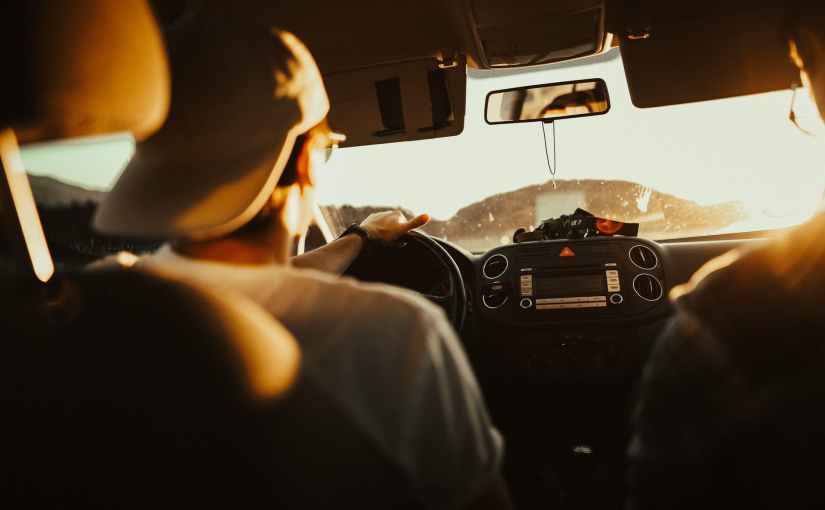
Yesterday I drove my son, Payton, back to college. He goes to the University of Portland, a 3-hour drive from Seattle. It was just me and him. Our family established an expectation that whoever is in the passenger seat has the job of keeping the driver awake and tending to their needs – unscrewing the top of my water bottle, getting my snack out of my backpack and putting it within reach, or sending a text. All of this to ensure a safe drive to wherever you’re going. So, Payton didn’t put on his headphones and zone out. He sat beside me and we chatted. On that drive I learned a lot, and it reminded me how valuable car rides with kids can be at finding out what’s on their minds.

I didn’t start the conversation. I left some silence and Payton filled in. He’s considering changing majors, and he shared what he learned from a conversation he had with a counselor. I asked some probing questions, like what was driving his desire to make a change. Physics was proving tough. Was Payton running from it? He reassured me he doesn’t love physics, but that’s not what’s driving his thinking. 

There would be lulls in the conversation. Then, because there wasn’t anything else to do, Payton would share more. 

I learned that he’d been concerned about his performance at school but was feeling better after his counselor made a few comments indicating Payton was doing just fine. Even better than others in some areas, like ‘statics’. I learned that, unlike a couple of his friends, Payton is not considering taking a semester off from school if they go virtual (Covid 19 cases are rising again with the omicron variant and there’s talk of schools going virtual). We reflected on a conversation we’d had with family during the holidays that covered several issues we don’t agree on – politics, women’s rights, vaccinations. Hearing Payton’s reactions to our family’s point of view was both funny and reassuring (side-note, I’m grateful to my family for having conversations like the one we did. It’s not easy these days, and we all agreed we need to keep talking). 

I asked Payton if he’d mind taking time for a sit down lunch. I was getting hungry and not much was available – we were well past Chehalis by this point. But a McMenamins was coming up in Kalama – a Pacific NW pub serving handcrafted beer and good pub fare. I didn’t need the beer, but I knew Payon would enjoy their burgers. During lunch, I learned that he’s anxious the tennis courts may be closed and hopeful he can play this weekend with one of his friends who’s a fantastic tennis player and really pushes Payton. I learned he’s hoping to land a job or an internship this summer. After lunch, we hopped back in the car. The last 30 minutes of the drive were quiet. There weren’t many other topics for us to cover. 

The drive reminded me of the carpools I used to drive when the kids were younger. The kids would sit in the back with their friends and chatter about life. They weren’t talking to me. In fact, sometimes I think they forgot I was in the car. I heard about tough classes at school, sibling fights, boy crushes, and, occasionally, rule breaking (nothing serious). Kids talk differently with their friends, and I got to see a different side of them. 

After I dropped Payton off at school, I took a short walk, got back in the car, and started the 3-hour drive back to Seattle. I don’t like driving, but the value I got from the ride with my son – and the value of driving carpool when the kids were younger – was well worth it. 

Atomic Habit

This year I’m tossing aside the New Year’s Resolution and replacing it with an Atomic Habit, inspired by James Clear’s book Atomic Habits. I first heard about this via Brene Brown’s podcast Dare to Lead where she talks with James about his book. Throughout the podcast he shares simple, straightforward approaches to building good habits and breaking bad ones that made me wonder, why haven’t I done this sooner? 

My Atomic Habit

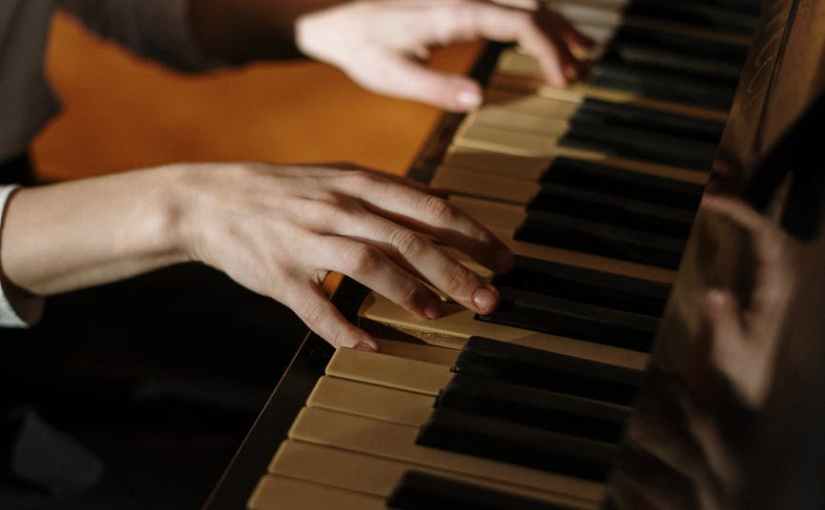
For years I’ve imagined how fun it would be to play the piano. I took lessons for a couple of years during grade school (aka centuries ago). Our daughter Ellie plays, and I’ve really enjoyed listening to her practice (benefit of working from home). She chooses sad, moving songs and plays with emotion – you see it as she leans into the keys and then leans back, slowly lifting her fingers at the end of a note. She’s a Freshman in high school, and I sometimes think about the piano after she leaves. It will sit idle if no one can play it. 

So, I wondered, maybe I could re-learn. I’ve had that thought a few times, but I quickly put it aside when I think about how packed our schedules are. How could I possibly fit more in? Four kids (okay three, one is in college now), a full-time job. Just keeping up with life is a lot. Two things came together that inspired me to go for it – I heard about Atomic Habits and it was Christmastime. 

2-minutes a day

One of James’ points is that establishing a habit can, and should, start with as little as 2-minutes a day. Sure, to get really good at something you’ll have to commit more time than that. But another of James’ points – you can’t improve a habit before you’ve established it as a habit. The purpose of starting with 2-minutes is to build the habit first. “I practice a little every day” is more convincing than “I practiced for 40 minutes a few weeks ago.” To be clear – the person I’m convincing is myself. I’m building evidence that I’m the person I want to be – a piano player. Starting with 2-minutes a day also eliminates a lot of friction or barriers that I might face if I tried to commit more than that. And, James believes, starting small can still lead to big change over time – aka atomic. 

As for Christmastime – I adore this time of year, especially the lights, the baking and the carols. I’ve always loved the idea of playing and/or singing carols with family and friends. So, picking a song would be easy.

“Ellie,” I declared, “I want to learn how to play ‘Silent Night’.” 

Ellie didn’t hesitate. She got on her phone, looked up some sheet music and printed it. Then she sat down with me. 

Ellie helped me work through the first few notes. First with my right hand. I kept trying to play the short notes quickly; she encouraged me to slow down. She told me not to worry about the pace while I learned the notes. She had me repeat “Silent Night, Holy Night” several times. Then we added the left hand. I repeated it several times with both hands.. “Silent Night, Holy Night.” Then she said, “That’s good for today.” 

“Wait, that’s it?”

“Yeah, we’ll learn more tomorrow.” 

The next day, Ellie sat with me again. I repeated  “Silent Night, Holy Night“ several times. Then we added “All is calm”. First the right hand, then the left, then together.

Then we stopped. 

Unknowingly, Elie reinforced the 2-minute habit, and it was working. Even just two stanzas at a time. By doing them often (I confess I didn’t practice EVERY day) I was making progress. By Christmas, I could play the whole song. I stumble, but I don’t mind. I’m enjoying it. And I don’t feel the angst of having made a commitment I cannot keep.

Next December, I’ll play “Silent Night” again, and, hopefully, I’ll add “Jingle Bells” to my short repertoire. In the meantime, I need to find a new song, so I can keep the habit. 

“Ellie…..”


Side note: After writing this, I realized I’m showing my kids we’re never too old to learn something new. That includes being okay with not being very good. I stumble on simple notes. I feel a little embarrassed. But I remind myself that’s part of learning. If they see me comfortable making mistakes and working through them, maybe they’ll give themselves grace when they’re learning something new. 

Opening Gifts –  Our Enthusiasm Almost Created a Monster

When kids are infants, they don’t understand what it means to receive a gift, let alone open one. It’s when they’re about three years old that they start to get the magic of Santa and the joy of opening presents. As parents, we were eager to watch our son, our first born, experience this. So eager we almost created a monster.  

Christmas Eve, after Payton went to bed, we stuffed his stocking and put out his Santa gift. I don’t remember what we got him. My memory was more around how eager I was to see his reaction the next morning.  Chad and I got up early so we wouldn’t miss it. 

When he came out of his room Christmas morning, Payton didn’t notice. He’d seen the gifts under the tree and the added gift wasn’t registering. So we urged him over to the tree and showed him his gift. When he realized it was his, he was thrilled to focus his attention on his new toy. But he still had a stocking, so we urged him to put his new gift aside and explore what was inside the giant sock. Candy, trinkets, and Legos. Payton was happy to open his Legos and start building. But we still had the gifts under the tree to open, so we urged him to put his Legos aside and said, “Hey Payton, put that down. Look at this one!”

Suddenly Chad and I stopped. We looked at each other, realizing what was happening. We were pushing our son to dismiss every gift he got so he could see what was next. 

Could we really be surprised next year if he presumptuously asked for his next gift? Nope. It would be our fault for teaching him to do exactly that. 

That’s not the kid we wanted to raise.

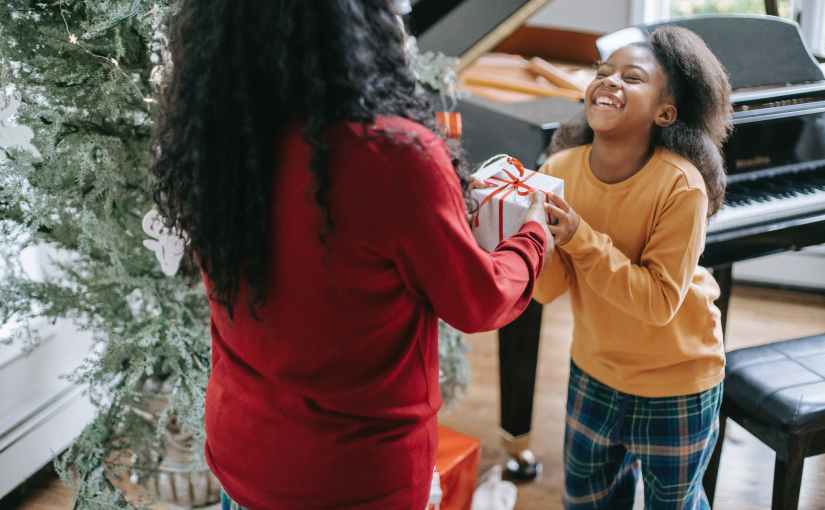
We paused. We let him build his Lego set. Chad opened a Lego set too, and they built them side-by-side. We’ve continued this tradition ever since. Everyone gets a small Lego set in their stocking and we pause while everyone puts theirs together. And we give fewer gifts. Everyone gets a gift from Santa and one gift from Mom and Dad. Just one. As our family grew (we have four kids) they got each other one gift, too. So there are a lot of presents to share. But we take our time, and we let everyone spend a few moments enjoying what they got before moving on. 

Teach Kids the Joy of Giving

This is a post about holiday giving. I’m writing this one a bit early because many people are already shopping to get ahead of supply chain issues. 

Giving gifts is work. Thinking about what the other person might want, searching for a gift, finding something great, only to realize you can’t afford it. Restarting your search. Kids couldn’t possibly understand all of this, but we can teach them.

Years ago Chad and I decided that at Christmas, all of our kids would give each other, and us, gifts. They were young, so we would pay for the gifts, but they had to choose, wrap and give them. We couldn’t afford much, so the price point was low. We’d take our kids to our local shops – Curious Kidstuff, Bartell Drugs, Click, Capers – and they’d search for gifts to give. 

Some of the gifts they’ve given: a pair of socks, a very small Lego kit, a book, a candle. You might think it would be a bit sad to receive a pair of socks. But, whoever received the socks appreciated them because they’d asked for “something cozy”. They knew the giver couldn’t afford a blanket (our price point was way too low for that). So, the cozy socks were appreciated. It’s not about the size or amount or cost of the gift. It’s the thought that counts. 

And kids learn the genuine joy of giving. I remember a gift I got from Emily. She was about five years old, and she was so excited for me to open the gift she’d gotten me. She bounced in her seat with anticipation. When I opened it, I saw a large necklace full of zinc zirconium (bright, “diamonds”). I’d asked for a “chunky” necklace, and she’d delivered. Part of her enthusiasm was, she explained, because the necklace was in the jewelry case at Target. To her, getting something from the jewelry case was truly special. I think she was more excited to watch me open my gift than she was to open her own. I couldn’t help but be touched. That was years ago, and I still remember it. True holiday spirit.

We’ve found so much joy and value out of this approach, I hope others will do the same. Please don’t be deterred by the possible cost. You can give homemade gifts. If you’re not naturally creative, it might feel odd at first, but if everyone is doing it, the appreciation for the thought and effort will come.